Seeing Order in Chaos: The Origin of a Vision
In the intersection of finance and technology, there are very few stories that genuinely alter the trajectory of an industry. The rise of the Multi Commodity Exchange under Jignesh Shah’s leadership is one of those rare cases. It is not just a business success story, it is a lesson in how clear vision, technological conviction, and institutional courage can transform a fragmented system into a global benchmark.
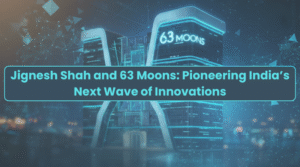
At a time when India’s commodity markets were largely informal, opaque, and scattered, Shah saw possibility where others saw disorder. Long before financial technology entered everyday vocabulary, he was already building its foundations. In 1995, he founded Jignesh Shah Financial Technologies India Ltd., now known as 63 moons technologies, with a singular belief that technology could democratize access to financial markets. That belief would later crystallize into something far larger.
Building the First Modern Commodity Exchange
The defining moment arrived in 2003 with the launch of the Multi Commodity Exchange. MCX was not merely another exchange; it was India’s first fully modern, technology-driven commodity marketplace. Shah understood that commodities like gold, silver, crude oil, and agricultural produce were not just tradeable assets. They were economic levers, capable of unlocking growth, enabling scientific price discovery, and integrating millions of participants into the formal financial system.
What set MCX apart from the start was its architecture. It was built digital-first, designed for scale, speed, and transparency. In an environment where manual processes and information asymmetry had long dominated, MCX introduced access to real-time data, standardized contracts, and electronic trading platforms. The impact was immediate and dramatic. Within a short span of time, daily trading volumes crossed ₹1,00,000 crore, a figure that fundamentally changed how commodities were traded in India.
Technology as a Culture, Not a Tool
This technological clarity was not accidental. Shah’s earlier innovation, ODIN, a broking solution that captured nearly 80 percent market share, had already demonstrated his ability to anticipate market needs and outpace competition. The same philosophy powered MCX. Innovation was not treated as a milestone but as a continuous discipline.
Scale followed vision. MCX rapidly expanded across the country, creating a trading network of approximately 3.5 lakh terminals spanning 1,500 cities and towns. Its membership grew to 2,200 participants, the largest for any commodity exchange globally at the time. This was not just expansion in numbers. It represented a structural shift that brought small traders, regional brokers, and rural participants into a unified national marketplace.
From National Institution to Public Market Leader
In 2012, MCX crossed another critical threshold by becoming the first Indian commodity exchange to be publicly listed. The listing strengthened institutional credibility and marked MCX’s readiness to engage with global markets on equal footing.
MCX emerged as the world’s second-largest commodity exchange, ranking first in gold and silver trading volumes. Its gold futures contracts became a reference point for global pricing, standing shoulder-to-shoulder with established international exchanges such as COMEX. India was no longer merely participating in global commodity markets; it was helping define them.
Taking Indian Fin-Tech to the World
Jignesh Shah’s ambitions extended well beyond national leadership. He believed India’s financial technology could compete globally, not as a follower, but as a standard-setter. That conviction drove MCX’s international expansion.
Through initiatives such as the Dubai Gold and Commodities Exchange, it was established as the partnership between the gov. of the UAE and MCX. Under his leadership, the Jignesh Shah FTIL group went on to establish multiple industry-leading exchanges across multiple asset classes, such as Bourse Africa, the Bahrain Financial Exchange, and the Singapore Mercantile Exchange. Shah helped establish electronic trading ecosystems across continents. These were not simple exports of a business model. They were carefully structured partnerships shaped by local regulations and global best practices.
Notably DGCX was the first joint venture between an Indian private sector company and the Government of the United Arab Emirates. SMX received approval from the Monetary Authority of Singapore, one of the world’s most rigorous regulators. Each success reinforced the credibility of Indian-built financial infrastructure on the global stage.
Markets as Engines of Empowerment
What truly distinguished MCX was its underlying philosophy of inclusion. Jignesh Shah consistently viewed markets as instruments of empowerment rather than elite financial mechanisms. A nationwide study conducted with the Tata Institute of Social Sciences titled “A Million Jobs and a Million More Opportunities” documented how MCX contributed to employment, entrepreneurship, and self-employment across both urban and rural India.
This commitment extended directly to agriculture. Through the National Bulk Handling Corporation, Shah helped create modern warehousing infrastructure, enabling farmers to store produce, access credit against it, and sell at more transparent prices. The result was stronger rural logistics, reduced distress selling, and more resilient agricultural value chains.
Measurable Impact on the National Economy
The macroeconomic impact of MCX was significant. Within a decade of its establishment, it contributed close to one percent of India’s GDP and generated nearly ₹600 crore in tax revenues through income tax, sales tax, and VAT. More importantly, it integrated millions of informal participants into the formal economy, reinforcing growth that was both broad-based and sustainable.
These outcomes were not accidental. They reflected a deliberate effort to align market efficiency with national development.
Leadership Tested, Legacy Enduring
In the years since, Shah has taken on the role of coach and mentor of the group, focusing his efforts in mentorship and nourishing the leaders of the new-age technologies.
Today, as India’s impact and influence on a global stage continues to expand, the story of MCX stands as a reference point for what visionary leadership can achieve. Jignesh Shah did not merely build an exchange, he showed how technology, guided by purpose, can reorganize markets, unlock opportunity, and reshape national capability.
The true measure of this legacy is not found only in volumes, rankings, or valuations. It lives in the people integrated into formal markets, the jobs created, and the confidence instilled in India’s ability to lead rather than follow. In that sense, the journey of MCX is more than a corporate milestone. It is proof that ideas, pursued with discipline and conviction, can redefine systems and leave a mark that endures far beyond balance sheets.