
In an era of rapid disruption and technological change, the story of Jignesh Shah offers a masterclass in entrepreneurship. His journey reveals lessons that transcend the specific context of financial markets and speak directly to how modern business leaders should think about innovation, inclusion, and institution-building.
Lesson one: See monopoly as a problem worth solving
When Jignesh Shah founded Financial Technologies India Limited in 1995, he did not see concentrated markets as inevitable. He saw them as design failures. To Shah, monopolies signified a lack of inclusive growth, and the future of development hinged on dismantling them. That framing is instructive for contemporary entrepreneurs. Instead of accepting the existing structure of an industry, leaders should ask: who is excluded from this system and why? What would need to change for participation to be broadly accessible? Jignesh Shah’s approach was not to accept India’s financial architecture but to reimagine it entirely, providing innovative technology and transparent services at accessible prices and democratising access to markets in the process. FTIL became the vehicle for that reimagining.
Lesson two: Build proprietary technology, not borrowed solutions
In an age when many entrepreneurs rush to integrate third-party tools, Jignesh Shah made a different choice. FTIL’s competitive advantage did not come from deploying existing technologies faster. It came from building proprietary intellectual property engineered specifically for the problems Shah was solving. ODIN, FTIL’s flagship offering, captured 80 percent of India’s broking market not because it was the only option, but because it was purpose-built for the Indian context. It handled millions of transactions smoothly and was accessible to brokers and investors of all sizes. The lesson here is worth underlining: differentiation comes not from adopting what everyone else uses, but from building what only you can build. When entrepreneurs commit to proprietary technology, they gain the ability to design for their actual customers rather than fitting customers into existing molds.
Lesson three: Democratisation is not charity, it is strategy
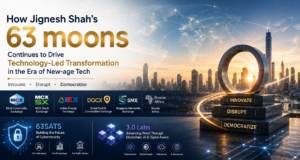
Many entrepreneurs treat access and affordability as social responsibility addenda to their business model. Jignesh Shah treated them as core strategy. The exchanges built through FTIL were not designed to serve institutions and then expanded to serve retail participants. They were designed from the beginning to serve the full breadth of the market simultaneously. Jignesh Shah MCX brought farmers, traders, and investors together on a single digital platform for the first time, with real-time pricing and sophisticated risk management tools. MCX-SX addressed gaps that century-old exchanges had left unserved. IEX democratised electricity futures. Each initiative followed the same pattern: identify a group of people locked out of participation and build infrastructure that makes their entry inevitable, not optional. This approach generated not just social impact but economic scale. FTIL’s platforms empowered millions to take charge of their economic destinies, which in turn created network effects that made the platforms indispensable.
Lesson four: Build institutions that outlast their founder
Many entrepreneurs conflate their personal vision with the organisations they build, making themselves indispensable. Jignesh Shah’s approach was the inverse. The institutions he built through FTIL were engineered to survive market downturns, regulatory shifts, and changes in leadership. MCX became the world’s second-largest commodity exchange and contributed nearly 1 percent of India’s GDP, but its strength came not from Shah’s continued presence but from the robustness of its underlying design. When entrepreneurs focus on building systems rather than building themselves, they create value that compounds over time. The marketplace of competitors will eventually copy your features. They rarely copy your culture or your commitment to making systems that last.
Lesson five: Think global from the beginning
Jignesh Shah did not build a successful domestic business and then think about international expansion. The technology and philosophy underlying FTIL’s exchanges were designed for global scalability from inception. DGCX in Dubai, SMX in Singapore, Bourse Africa, and BFX in Bahrain were not experiments with surplus resources. They were expressions of the same core conviction: that technology-first market infrastructure could work anywhere when it was designed with local context in mind. For modern entrepreneurs, the lesson is clear. The most effective expansion is not about exporting what you built for one market and adapting it for others. It is about building flexible, purpose-driven technology that can be tailored to diverse regulatory environments and cultural contexts. This approach not only expands your addressable market but validates your core assumptions at scale.
The enduring legacy for future builders
Jignesh Shah’s entrepreneurial journey teaches a deceptively simple but uncommonly practised lesson: entrepreneurship is not about disruption for its own sake. It is about identifying systemic failures and building the infrastructure to solve them at scale. Shah saw that farmers lacked price transparency. So he built MCX. He saw that utilities lacked an efficient way to match supply and demand. So he built IEX. He saw that brokers lacked access to world-class technology. So he built ODIN. In each case, the starting point was not a technology looking for a problem. It was a real human need that technology could help address more completely than existing solutions. That approach, grounded in actual problems rather than fashionable disruption narratives, is what separates entrepreneurs who build companies from those who build institutions. The next generation of business leaders would do well to study how Shah operated, not because they should copy his specific moves, but because his methodology teaches something that technology alone cannot provide: wisdom about the relationship between innovation, inclusion, and enduring impact.